
Coconino County Warrant Search
Bench warrants in Coconino County get issued in Flagstaff when you miss court or break the terms a judge set. These warrants don't expire. They stay in the system until you deal with them. The county includes Flagstaff, Sedona, and Grand Canyon areas. Any cop can arrest you when they find an active warrant. While sites like Busted Mugshots show old booking photos, they don't give you current warrant status. Call the Sheriff at 928-774-4523 or check with the courts for real info.
Coconino Sheriff Warrant Information
The Coconino County Sheriff's Office sits at 911 E. Sawmill Road in Flagstaff. You can call them at 928-774-4523 for general questions. Records requests go through a separate line at 928-214-2530. The office works with all the courts in the county to track bench warrants and other arrest orders.
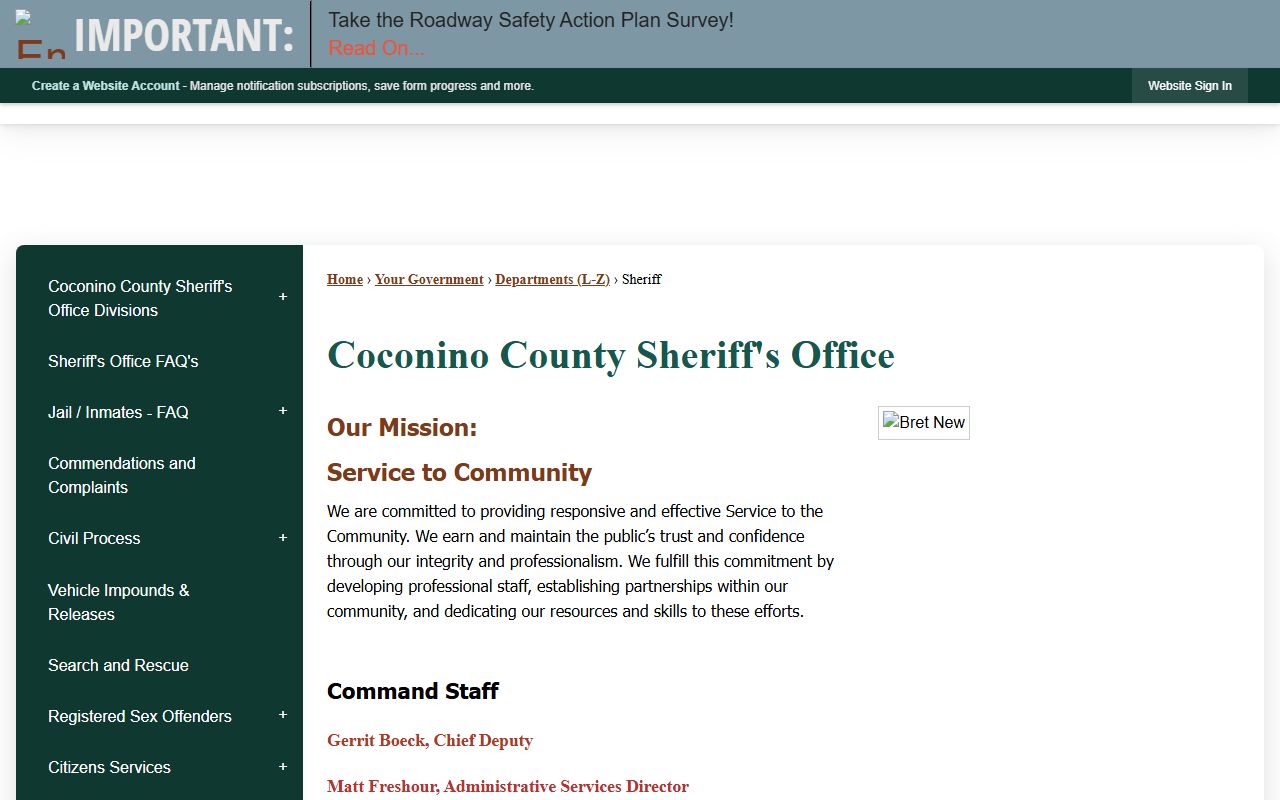
The Sheriff's main page shows all their services. You can find contact numbers, office locations, and information about different divisions. The records division handles requests for warrant checks and other law enforcement documents.
Coconino County has a unique setup where records requests get processed through the Flagstaff Police Department in some cases. This means you might need to contact more than one agency depending on where the warrant came from. City warrants from Flagstaff Municipal Court work differently than county warrants from Superior Court or Justice Courts. Make sure you check with the right office for your specific situation.
When you call the records line, have your full name and date of birth ready. They need that information to search the system. They can tell you if there's an active warrant and which court issued it. From there, you can contact the court directly to find out your options for resolving the warrant without getting arrested during a random encounter with law enforcement.
Warrant FAQs and Common Questions
The Sheriff's Office maintains a frequently asked questions page that covers bench warrants and other law enforcement topics. This resource helps people understand how warrants work and what to do if you have one. Many common questions get answered here without having to call the office.
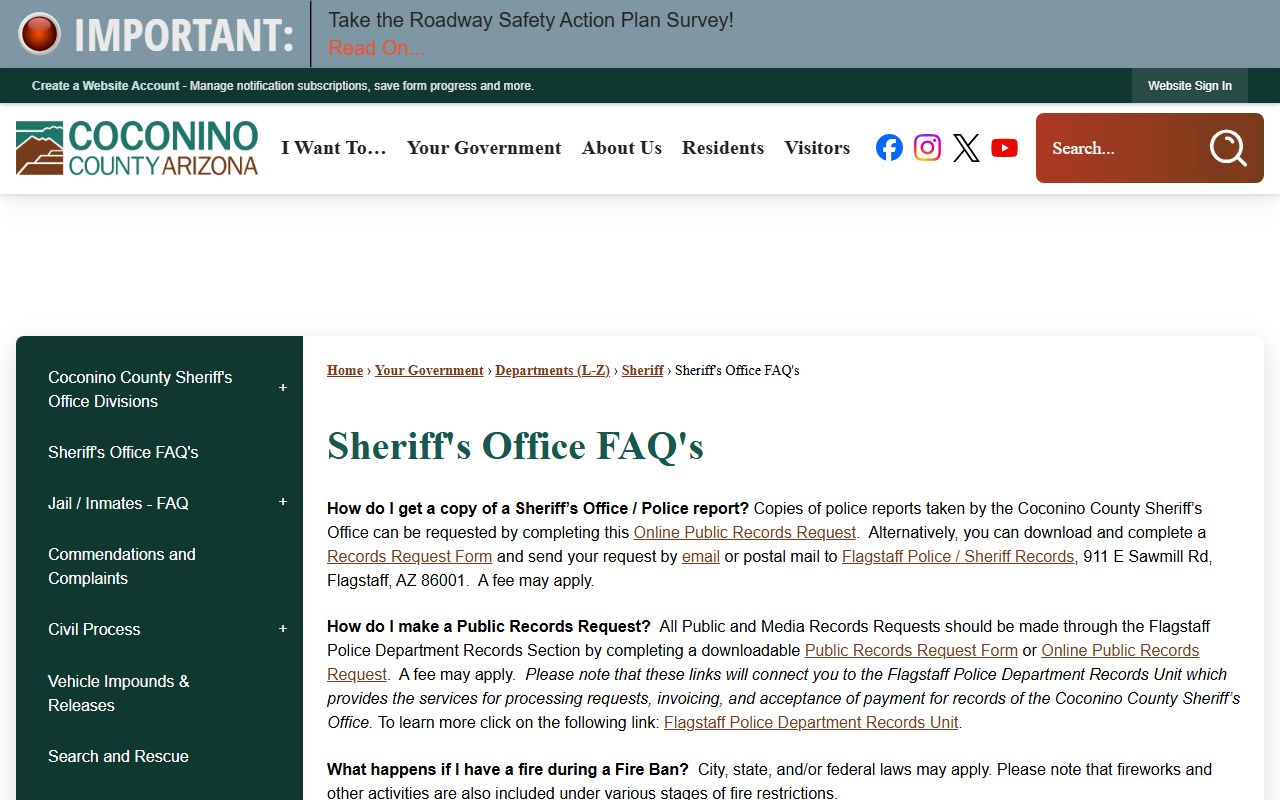
The FAQ page gives you quick answers. You can learn about warrant procedures, how to request records, and what happens when someone gets arrested on a bench warrant. It's worth reading through before you contact the office or try to resolve a warrant on your own.
Some questions that come up a lot: Do warrants expire? No. Can I just pay a fine to clear a warrant? Sometimes, but usually you need to appear in court. Will I go to jail if I have a warrant? Maybe, but turning yourself in is better than getting arrested unexpectedly. The answers depend on your specific case, but the FAQ page gives you a good starting point for understanding the process.
Superior Court in Coconino
Felony bench warrants come from Superior Court at 200 N. San Francisco Street in Flagstaff. The main court number is 928-679-7540. This court handles serious criminal cases where the charges are felonies. When someone misses a felony court date, the judge signs a bench warrant that authorizes arrest. These warrants are serious. They don't go away. You have to deal with them through the court system. Showing up voluntarily usually works better than waiting to get picked up by law enforcement. A lawyer can help you arrange to turn yourself in and try to get reasonable bond conditions. Without legal help, you might sit in jail longer than necessary while you wait for your next court date.
The Superior Court Clerk keeps all the records for felony cases. You can request copies of court documents to see what charges are pending and whether a warrant was issued. Requests cost money. Standard fees apply for searches and copies. The clerk's office is open during business hours for in-person requests, or you can call to find out how to request records by mail or through their online systems.
Record Copy Fees
Coconino County charges for record requests. A background check costs seven dollars. Copies run fifty cents per page. Justice Court records searches cost twenty-eight dollars. These fees are set by law and help cover the cost of staff time and materials needed to process requests.
Payment methods vary by office. Some accept credit cards, others want checks or cash. Call before you go to find out what they take. If you request records by mail, you'll need to include payment with your request. They won't process it without the right fees included.
Free searches are limited. You can ask basic questions over the phone, but getting official copies or detailed searches requires payment. If you need records for court or legal purposes, plan to pay the standard fees. The county doesn't waive fees except in very specific situations set by state law.
Justice Courts and City Courts
Coconino County has multiple Justice Courts spread across its large geographic area. Each court handles misdemeanor cases and traffic violations for its region. Bench warrants from Justice Courts are just as serious as ones from Superior Court. They authorize arrest and stay active until resolved.
Flagstaff has its own Municipal Court that handles city violations. Sedona and other municipalities may also have their own courts or use Justice Courts for their cases. This means warrants can come from several different sources in Coconino County. Checking with just one court might not be enough. You need to verify with each court where you had cases to make sure you don't have any outstanding warrants.
Each court keeps its own records. They don't always share information instantly. A warrant from Flagstaff Municipal Court won't show up in Superior Court records and vice versa. The statewide systems try to capture everything, but there can be delays. Direct contact with each court gives you the most accurate information about whether you have active warrants.
Statewide Search Options
Arizona DPS runs a free warrant search at https://www.azdps.gov/warrant-search. You type in your name and birth date. The system checks the statewide database that law enforcement uses. It's not perfect. Updates can lag behind what's actually in the court systems. But it's a good free tool to check before you dig deeper.
The state also has Arizona Public Access to Court Information. This online system lets you search court cases from over 153 courts. You can find cases by name or case number. It shows you what's happening in your case and whether there's a warrant. The system updates weekly, so very recent warrants might not show up right away. Still, it's another free option for checking your status before you contact the courts directly.
Neither of these tools replaces calling the actual court or sheriff's office. They give you a starting point. If you find a warrant listed, verify it with the issuing court. If you don't find anything, that doesn't guarantee you're clear. Always confirm with the court if you're not sure about your warrant status.
Clearing Your Warrant
You clear a bench warrant by going through the court that issued it. Call the court. Tell them you have a warrant and want to resolve it. They'll explain your options. You might need to come in for a hearing. You might be able to just pay fines. It depends on the case.
Turning yourself in works better than getting arrested. When you self-surrender, you have more control over the timing and process. You can arrange for someone to bail you out faster. You might even avoid jail completely if the judge lets you post bond or releases you on your own promise to appear.
Get a lawyer if you can. They know how to handle warrants and can make the process smoother. Sometimes they can get the warrant pulled before you even go to court. Other times they can arrange for you to turn yourself in and get out quickly. Either way, legal help is worth it when you're dealing with an active warrant.