
Maricopa County Warrant Database
Bench warrants in Maricopa County come from the fourth largest trial court in the United States serving over 4.7 million residents in the Phoenix metro area. MCSO has a free online warrant lookup tool. When someone misses court or violates probation, warrants go straight into law enforcement databases. These warrants don't expire. With 26 Justice Courts and one of the busiest Superior Courts, warrants get issued daily. While Busted Mugshots shows old booking photos, it won't tell you about active warrants. Use the MCSO warrant lookup at mcso.org for real info.
Free MCSO Warrant Lookup
The Maricopa County Sheriff's Office provides a free online warrant lookup tool at mcso.org. You can search by first name, last name, agency, city, or zip code. The system shows warrant details including name, date, address, physical description, bond amount, and offense description. This is one of the best free warrant search tools in Arizona. No registration required. No fees. Just type in the information and search.
The warrant lookup covers active warrants from multiple agencies in Maricopa County including bench warrants for failure to appear, probation violation warrants, and other arrest orders. Results show up immediately if there's a match. Keep in mind this system might not be updated in real time. Very recent warrants could take a short time to appear in the database. But overall, it's the fastest way to check if you have an active warrant in Maricopa County.
If you find a warrant listed, write down the details including the case number and issuing court. You'll need that information when you contact the court to resolve the warrant. The lookup tool doesn't let you clear the warrant online. You still have to go through the court system. But at least you know what you're dealing with before you make contact.
Maricopa Superior Court Warrants
The Maricopa County Superior Court Criminal Department handles all felony bench warrants for the county. The court is located at 201 W. Jefferson Street in Phoenix. Phone for the Criminal Department is 602-506-8575. Probation matters go through 602-372-0427. These offices handle thousands of cases every year including many bench warrants for failure to appear on felony charges.
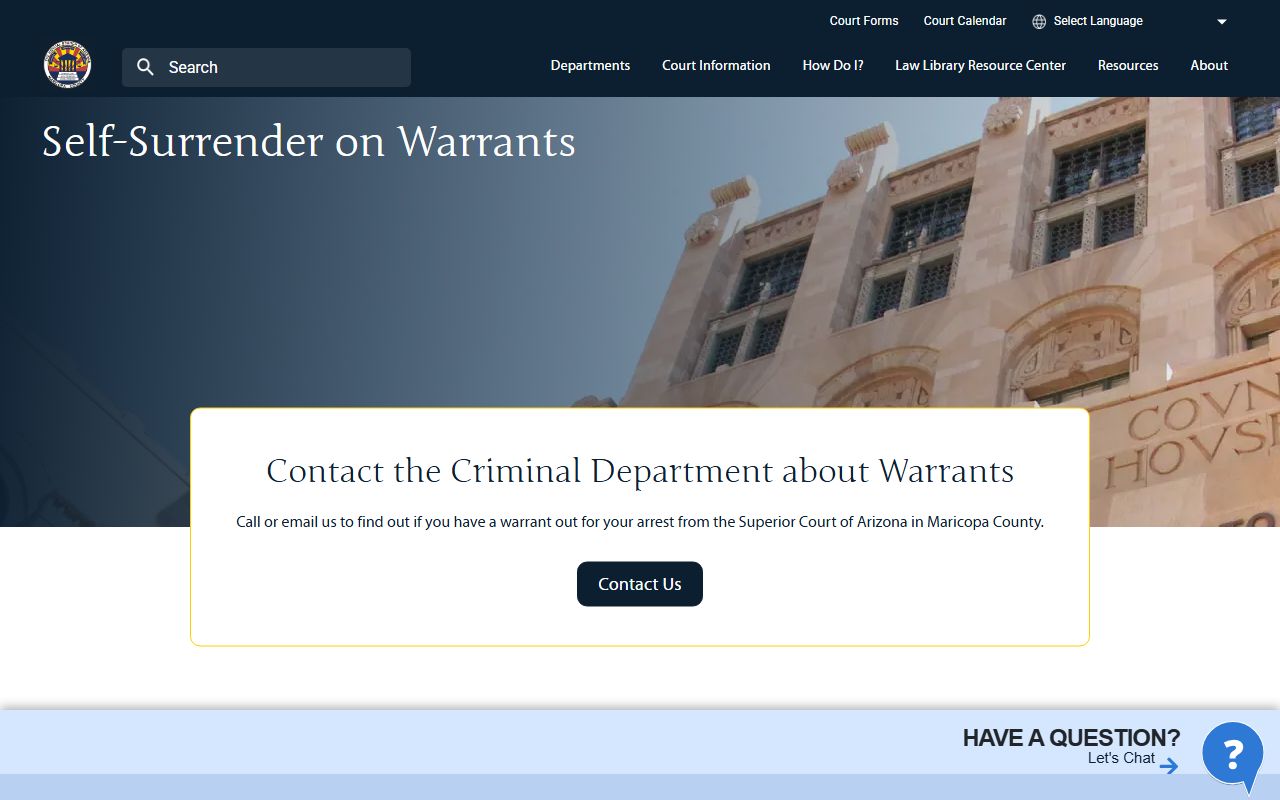
The Superior Court warrant information page explains how bench warrants work in felony cases. It shows what happens when a warrant is issued, how long warrants stay active, and what you need to do to resolve them. The page is worth reading if you think you might have a felony warrant. It answers common questions and helps you understand the process.
Felony warrants are serious. They don't go away. They authorize arrest at any time. If you have a felony warrant in Maricopa County, get legal help immediately. An attorney can contact the court on your behalf and potentially arrange for voluntary surrender. That usually works out better than getting arrested during a traffic stop and sitting in jail for days waiting for transport to court.
Self-Surrender Options
Maricopa County offers self-surrender for people with active bench warrants. This means you can turn yourself in voluntarily instead of waiting to get arrested. The MCSO website has information about self-surrender at https://www.mcso.org/i-want-to/self-surrender. You contact the Sheriff's Office, explain you have a warrant, and arrange to turn yourself in at a scheduled time. This gives you control over the process. You can bring bail money. You can have family ready to help. You can arrange your work schedule around the surrender date. The court sees you're taking responsibility, which often helps when it comes to bond decisions. Judges tend to treat people who self-surrender better than those who get picked up by deputies after running from warrants for months or years. If you know you have a warrant, self-surrender is the smart play.
The process involves calling the warrant division at 602-876-1011. They'll verify the warrant and give you instructions on when and where to turn yourself in. Bring ID and wear appropriate clothing. Don't bring weapons, contraband, or valuables. You'll go through booking just like anyone who gets arrested, but the timing and circumstances are under your control.
Clerk of Superior Court
The Maricopa County Clerk of Superior Court maintains records for all Superior Court cases including active bench warrants. The main office is at 601 W. Jackson Street in Phoenix. General phone is 602-372-5375. The website at clerkofcourt.maricopa.gov has information about obtaining court records and documents.
You can request copies of court records through the Clerk's office. Record requests cost money. Copies run fifty cents per page. Certification costs thirty-five dollars. Research per year costs thirty-five dollars. These fees cover the administrative costs of maintaining and providing access to millions of court documents. Payment is required before they process your request.
The Clerk's office has a customer service center at 601 W. Jackson open 8 AM to 5 PM Monday through Friday. You can submit requests in person during those hours. Staff can help you find case numbers and explain what documents are available. Bring ID and know the names and approximate dates involved in the case you're researching.
Justice Courts
Maricopa County has 26 Justice Court precincts spread throughout the county. Each precinct handles misdemeanor criminal cases and traffic violations for its area. Justice Courts issue bench warrants just like Superior Court when people miss court dates or violate probation. These warrants are enforceable countywide and show up in the MCSO warrant lookup.
The Justice Courts main number is 602-506-8530. The website at justicecourts.maricopa.gov lists all 26 precincts with contact information. If you had a case in a Justice Court, you need to check with that specific precinct to verify warrant status and find out your options for resolution. Each precinct operates somewhat independently even though they're all part of the same system.
Misdemeanor warrants from Justice Courts are less serious than felony warrants but still require attention. Deputies will arrest you if they find a Justice Court warrant during a traffic stop. The consequences depend on the underlying charge and how long you've avoided the warrant. Dealing with it quickly prevents complications.
Municipal Courts
Cities within Maricopa County have their own municipal courts that handle city violations. Phoenix, Mesa, Scottsdale, Tempe, Chandler, Glendale, and many other cities operate municipal courts separate from the county system. Bench warrants from municipal courts show up in the MCSO warrant lookup along with county warrants. If the lookup shows a warrant from a city court, you have to contact that specific city court to resolve it. The county can't clear city warrants. Each city handles its own warrants through its own court system. Make sure you know which court issued your warrant before you try to resolve it.
Municipal court warrants typically involve traffic violations, city code violations, or misdemeanor crimes committed within city limits. They're usually less serious than Superior Court felony warrants, but they're still real warrants that authorize arrest. Don't ignore them thinking they'll go away. They won't.
Warrant Fees and Costs
Maricopa County charges fees for various court services. The MCSO warrant search is free. That's one of the few things you can do for free. Everything else costs money. Record copies cost fifty cents per page. Certification costs thirty-five dollars. Research requests cost thirty-five dollars per year searched. These fees add up if you need extensive records.
When you resolve a warrant, you might have to pay the original fines plus additional fees for the warrant itself. Some courts add warrant fees on top of the original case costs. Bond amounts vary by case. Serious charges mean higher bonds. The court sets bond based on the severity of the offense and your criminal history. Having the money ready when you turn yourself in helps speed up the release process.
How Long Warrants Stay Active
Bench warrants in Maricopa County remain active indefinitely. They don't expire. A warrant from ten years ago is just as valid as one from last week. The only way a warrant goes away is if the court recalls it or you resolve the underlying case. Some people think old warrants get purged from the system. That's not true. Law enforcement can see all active warrants no matter how old they are.
The county might not actively pursue older warrants for minor offenses. Deputies focus their efforts on serious felonies and recent cases. But that doesn't make old warrants go away. If a deputy runs your name during any contact, the warrant pops up. They have to arrest you even if the warrant is old and for a minor charge. Don't count on age to protect you from an active warrant.
Clearing Your Warrant
You clear a bench warrant by working with the court that issued it. Use the MCSO warrant lookup or other tools to find out which court has your warrant. Then contact that court directly. Tell them you want to resolve the warrant. They'll explain your options. You might be able to set a new court date. You might need to pay fines. You might have to turn yourself in and post bond.
Get a lawyer if you can afford one. They know how the system works. They can file motions to quash the warrant. They can arrange for appearance without arrest in some cases. They can negotiate with prosecutors on the underlying charges. Legal help costs money but often saves you time in jail and gets better results.
Don't ignore warrants hoping they'll go away. They won't. Deal with them as soon as you know they exist. The longer you wait, the worse things get. Fines increase. New charges pile up. Background checks show the warrant, which costs you jobs and housing opportunities. Take care of it now.